by CCLtd | Dec 11, 2025 | Office Lighting
Creating a comfortable and productive workspace involves many factors, including your furniture layout, indoor air quality, room temperature, and noise levels. However, one of the most important elements that people often overlook is office lighting. The quality of lighting in your workplace affects your comfort, mood, energy levels, and the way you complete tasks throughout the day.
Choosing the right office lights is not just about brightness—it’s about understanding how light affects your eyes, how different lighting setups influence your performance, and which fixtures support the specific tasks you handle daily.
When you invest in effective workplace lighting, you give yourself a better chance to work comfortably for long hours without strain, distractions, or fatigue. This guide explains everything you need to know about choosing the right office lights so you can create a workspace that feels professional, efficient, and visually comfortable.
Why Office Lighting Matters More Than You Think
Many people experience tiredness, lack of focus, or discomfort during work hours without realising that poor lighting is often the cause. The human eye reacts strongly to brightness levels, colour temperature, flicker, glare, and shadows.
When the lighting in your office is too dim, your eyes are forced to work harder, which can lead to strain, headaches, and reduced productivity. Similarly, lighting that is too harsh or uneven can make your workspace feel stressful and unwelcoming.
Good lighting creates a balanced atmosphere that supports alertness and concentration. When your workspace lighting is designed correctly, you feel more energetic, you make fewer mistakes, and your overall workflow becomes smoother.
Understanding the Different Types of Office Lights
Before choosing the right lights, it’s important to understand the different types commonly used in workplaces. A well-designed office usually includes a mix of lighting types, each serving a unique purpose.
1. Ambient Lighting
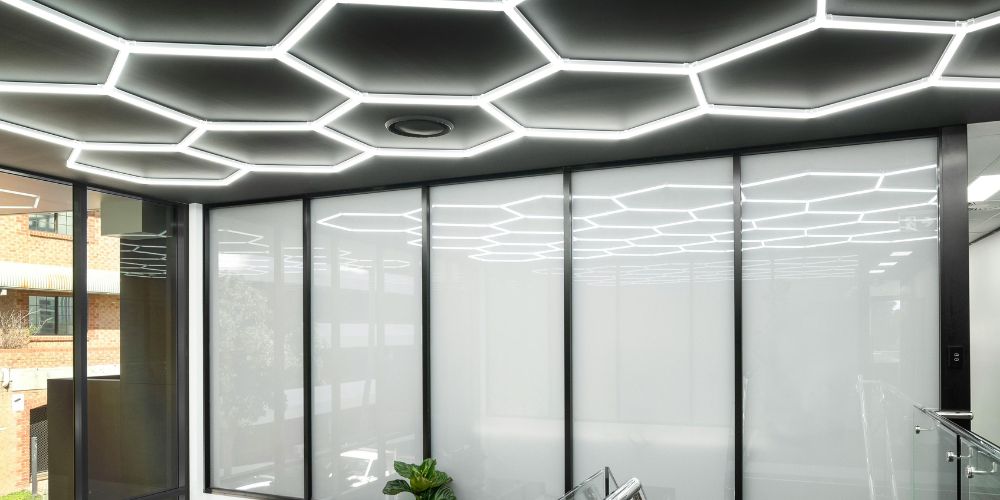
Ambient lighting provides the general illumination that fills the entire room. Most offices use overhead ceiling lights such as LED panels, suspended fixtures, or recessed lighting to achieve soft, even brightness.
2. Task Lighting
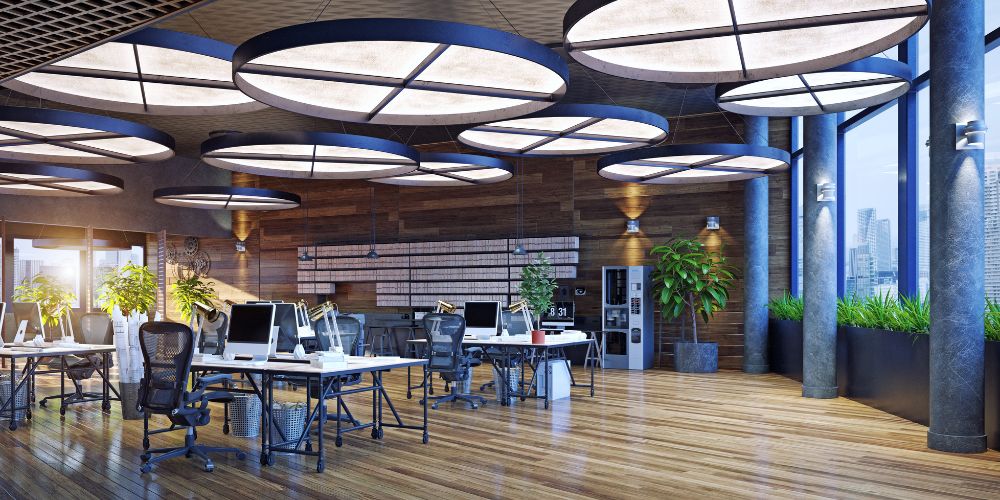
Task lighting is focused illumination designed for specific work areas—such as reading, writing, or computer work. Desk lamps, adjustable spotlights, and under-cabinet lights are commonly used to improve visual comfort for close-up tasks.
3. Accent Lighting
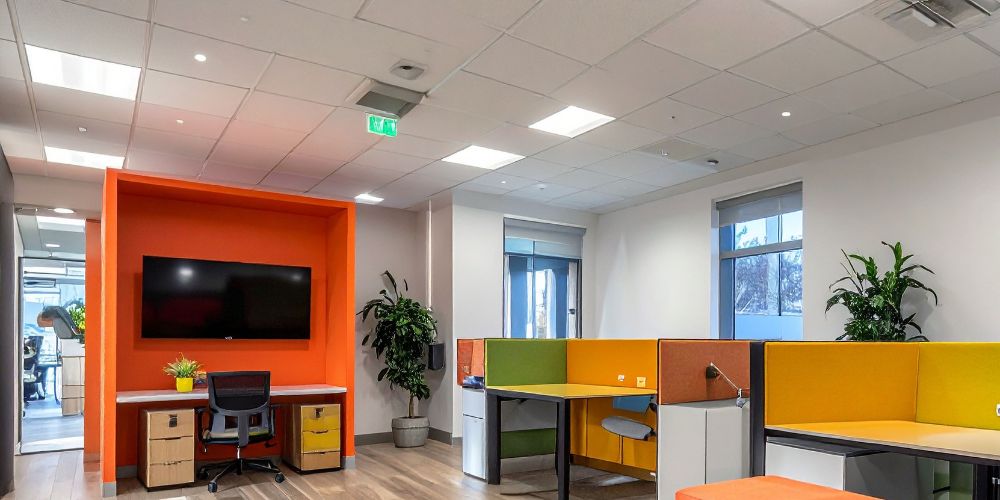
Accent lighting highlights certain areas of a room, such as artwork, décor, or architectural features. While not essential, it adds depth and visual interest to the workspace.
If you want stylish and functional ceiling options to enhance your ambient, task, and accent lighting, check out our guide,
Versatile and Stylish Ceiling Lighting Solutions.
A balanced combination of ambient, task, and accent lighting helps create an efficient and visually comfortable office.
Choosing the Right Colour Temperature
Colour temperature determines whether light feels warm, neutral, or cool. It is measured in Kelvin (K):
- Warm light (2700K–3000K) – cosy, relaxing ambience
- Neutral light (3500K–4000K) – natural and balanced
- Cool light (5000K–6500K) – crisp and energising
Most offices work best with neutral to cool white because it promotes alertness and clarity without feeling harsh.
How Bright Should Your Office Lights Be?
Brightness is measured in lumens, and the right level depends on room size and tasks performed.
Recommended lighting levels:
- General offices: 300–500 lumens/m²
- Detailed task areas: 500–700 lumens/m²
- Meeting rooms: around 300 lumens/m²
- Breakout areas: softer, lower brightness
Balanced illumination helps reduce eye strain and maintain comfort.
Importance of Natural Light
Natural daylight improves mood, productivity, and well-being. If your office has windows, use natural light to complement artificial fixtures. Add blinds or anti-glare filters to prevent screen reflections.
Reducing Glare for Eye Comfort
Glare makes it difficult to focus and may cause eye fatigue or headaches. Reduce glare by:
- Using diffused ceiling lights
- Adjusting monitor angles
- Choosing matte desk surfaces
- Avoiding direct light behind your workspace
- Installing LED fixtures with diffusers
Correct Placement of Office Lights
Lighting placement affects how well your workspace performs. Follow these tips:
- Use evenly spaced overhead fixtures
- Position task lamps beside (not behind) monitors
- Avoid shadows across your desk
- Choose wide-coverage lighting rather than narrow beams
Understanding CRI (Colour Rendering Index)
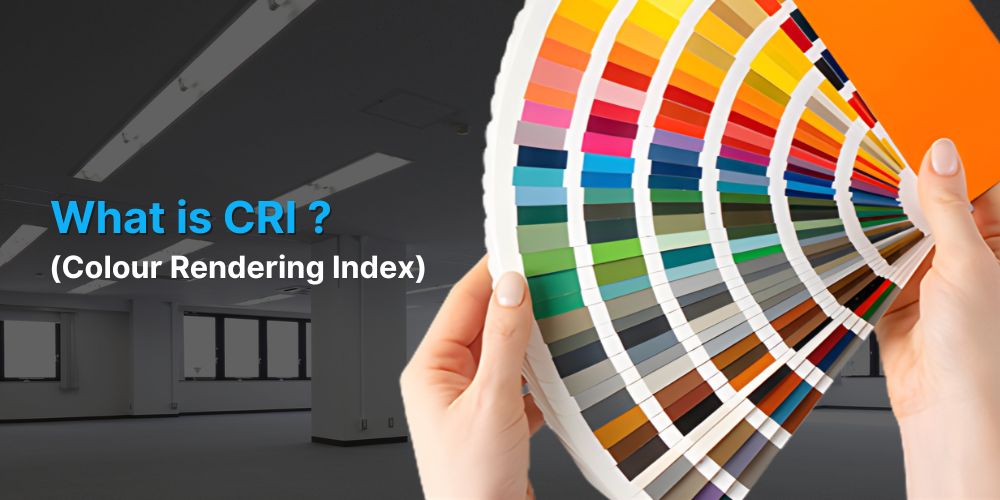
CRI measures how accurately a light source displays colours. Offices should use CRI 80+ lighting to ensure clear visibility of documents, screens, and materials.
Adjustable and Smart Lighting
Smart lighting systems allow you to adjust brightness and colour temperature throughout the day. They help maintain consistent comfort, reduce eye strain, and adapt to natural daylight changes.
Lighting for Small Workspaces
For small offices:
- Use bright but soft overhead lighting
- Add compact LED desk lamps
- Choose wall-mounted fixtures to save space
- Use neutral-white light for clarity
- Avoid bulky or oversized fittings
Lighting for Large Offices
Large workplaces need consistent, well-distributed lighting. Consider:
- Evenly spaced LED ceiling panels
- A mix of ambient and task lighting
- High-lumen fixtures
- Accent lighting to remove dark corners
If your office includes a suspended ceiling, choosing the right fixtures becomes even more important. Our detailed guide on Top 3 Lighting Options for Suspended Ceilings explains the best panels, LEDs, and fittings for modern workplaces.
Final Thoughts
Choosing the right office lights is one of the smartest investments for improving comfort, productivity, and the overall professional feel of your workspace. When lighting is bright enough, balanced, and positioned correctly, your workday becomes smoother, more enjoyable, and far more efficient.
Trusted by businesses across the region, Crisp Contracts Suspended Ceilings LTD delivers lighting and ceiling solutions that make workspaces brighter, modern, and more functional for everyday productivity.

by CCLtd | Aug 1, 2025 | Ceiling
Ceiling design tends to be forgotten, but it contributes significantly towards creating a productive, professional, and pleasingly presented working environment. The perfect ceiling improves acoustics, lighting, and even employee health. In this blog, we’ll take you through choosing the ideal ceiling for your office.
Why Ceilings Matter in Office Design
Your office ceiling isn’t just a structural feature; it’s a key design element that influences how your workspace looks and functions. A well-designed ceiling improves acoustics, supports energy-efficient lighting, and boosts air circulation. Whether you’re building a new workspace or revamping an existing one, selecting the right ceiling can significantly enhance your overall office environment. Suspended ceilings and commercial false ceilings are particularly valued in UK offices for their streamlined appearance and practical advantages.
For example, drop ceilings can conveniently hide unsightly cabling and ductwork, producing a neater, distraction-free environment. Drop ceilings are also modular, allowing damaged panels to be replaced without disassembling the entire system. With so many choices to select from, it is important to take functionality and aesthetics into account prior to making a final decision.
Key factor to consider while choosing the right ceilings for your office.
Acoustics: Do You Require Soundproofing?

In open offices or high-traffic workspaces, noise control is critical. Certain ceiling materials, particularly those used in suspended ceilings, are incorporated to contain sound and reduce echo. Acoustic ceiling tiles maintain a quieter office environment, enhance concentration, and improve communication. They are particularly suitable for meeting rooms, call centers, and open collaboration spaces.
Lighting Compatibility: Recessed, Panels, or Pendants?
Your ceiling must blend in with your lighting scheme. Drop ceilings provide easy installation for recessed lighting, LED panels, or pendant lighting. Commercial false ceilings usually include customizable panels to enable smooth transitions of light. This enhances both form and efficiency of energy usage as well as the elimination of installation inconvenience.
Access to Utilities: HVAC and Wiring

One of the greatest benefits of suspended ceilings is that it is easy to access utilities. If your office has intricate IT systems, air conditioning, or regular servicing, then easy entry via a ceiling is a must. Ceiling tiles can be easily removed or lifted without having to affect the entire building.
Aesthetic Appeal: Match the Office Style
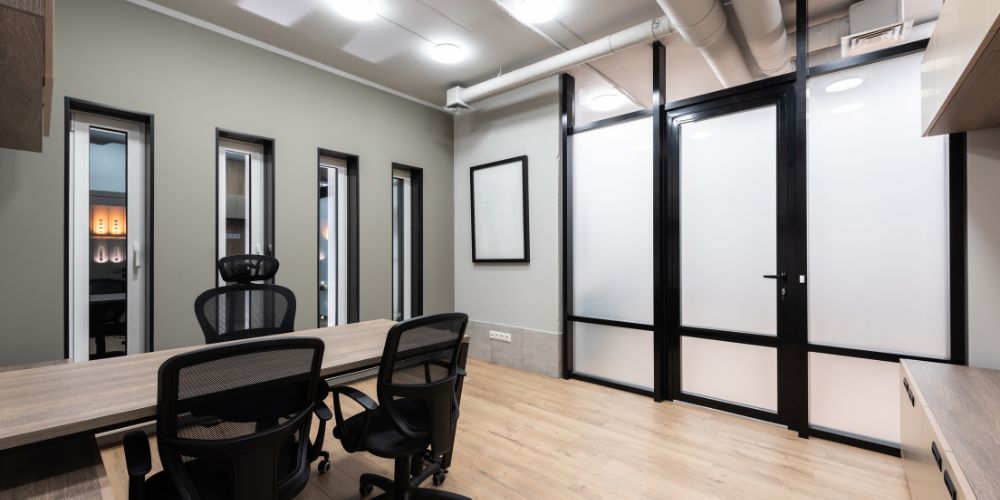
Ceilings assist in building your workplace and brand identity. Modern, sleek, or traditional, you choose. You can pick a selection of metal, gypsum, or acoustic tiles with several finishes to match your preferred visual. Suspended ceilings provide a minimalist look, and exposed ceilings can add an industrial touch.
Budget and Maintenance
Initial expenditure varies greatly based on material and installation type. While some ceilings are inexpensive to install, they can be more expensive to maintain in the future. Drop ceilings, for instance, are cheap and simple to maintain, making them suitable for low-budget companies.
Well-Liked Office Ceiling Types (With Pros & Cons Table)
| Ceiling Type |
Pros |
Cons |
| Suspended Ceilings |
Simple facility access, modular, clean finish |
Can shrink headroom, variable cost |
| Commercial False Ceiling |
Glamorous, effective insulation hides services |
More expensive, difficult repair access |
| Drop Ceiling |
Inexpensive, good acoustics, versatile |
Will not fit every design |
| Exposed Ceiling |
Modern, industrial appearance makes the most of the ceiling height |
Poor sound control, tricky service access |
| Gypsum Ceiling |
Smooth, fire-rated finish |
Non-modular, more difficult to alter or repair |
Also Read: Advantages and Disadvantages of Commercial False Ceilings
Expert Tips for Choosing the Right One
Before deciding on your ceiling, consider your office’s specific needs. If your business entails technology, make cable and system accessibility your priority. For artistic or client-facing offices, select ceiling finishes that reflect your brand. Always include maintenance costs over the long term; an extra-expensive ceiling could save money in the long run.
It’s a good idea to consult with a UK-based commercial interiors expert. They can assess requirements like ceiling load, fire safety, acoustics, and ventilation. Don’t forget to request material samples to ensure the look and texture match your expectations.
When to Replace or Upgrade Your Ceiling
If your ceiling is water-stained, sagging, or old-fashioned in design, it is time for an upgrade. Ceiling replacement is also necessary in the case of total office renovations or brand repositioning. Modern suspended ceilings and false ceiling systems bring in both performance and design enhancements.
Replace when your existing ceiling impedes natural light, disrupts airflow, or limits access to wiring and services. With newer materials entering the UK marketplace, you can improve both form and function without an overall overhaul.
Conclusion
The ideal ceiling option benefits extend beyond appearance, enhancing comfort, energy efficiency, and office productivity. From dropped ceilings to suspended ceiling options, Crisp Contracts helps UK companies identify the best ceiling solution. Contact us today to explore customized ceiling solutions tailored to your workplace objectives.

by CCLtd | Mar 18, 2025 | Office Partitions
Creating a functional and visually appealing workspace is essential for small businesses. However, designing an efficient office layout can be challenging, especially with a limited budget. Office partitions offer a cost-effective solution to optimize space, improve workflow, and enhance privacy without the expense of full-scale renovations. This article explores budget-friendly commercial interior solutions to help you create the perfect workspace
1. Modular Office Partitions: Flexible and Affordable
Modular office partitions are one of the most efficient and budget-friendly solutions for small businesses. These partitions offer flexibility, allowing businesses to reconfigure spaces as needed without extensive renovations.
- Cost-Effective: Since modular partitions are pre-fabricated, they reduce labor and material costs significantly.
- Customizable Designs: Available in various materials, colors, and finishes to match your office aesthetic.
- Quick Installation: Unlike traditional walls, modular partitions can be installed in hours or days, minimizing business disruptions.
- Reusability: If your office moves or expands, modular systems can be relocated or adjusted to fit new spaces.
2. Drywall Partitions with a Minimalist Approach

For small businesses looking for a cost-effective yet sturdy partition solution, drywall partitions offer a great balance of affordability and functionality. They provide a clean, professional look while being easy to install and modify.
- Affordable & Durable: Drywall is a budget-friendly option for creating semi-permanent office partitions.
- Customizable: It can be painted or decorated to match the office theme.
- Soundproofing Options: Additional insulation can be added for noise reduction.
3. Portable and Folding Partitions: Budget-Friendly and Versatile

For businesses needing temporary or adjustable space solutions, portable and folding office partitions are an excellent choice
- Highly Flexible: Easily movable to create different office layouts based on changing needs.
- Budget-Friendly: They are More affordable than fixed partitions, making them a great option for startups.
- Easy Setup: No professional installation is required, saving on labor costs.
- Noise Reduction: Some folding partitions are designed with soundproofing materials for enhanced privacy.
4. Cost Factors: Materials, Labor, and Customization
When selecting office partitions, understanding cost factors can help small businesses make informed decisions.
- Size: Larger partitions require more materials, increasing costs.
- Materials: Budget-friendly options include MDF and acrylic, while premium materials like tempered glass and aluminum cost more.
- Labor Costs: Professional installation fees vary, but modular and portable solutions reduce these expenses.
Customization: Unique designs, colors, and branding elements add to the overall cost.
5. Hidden Expenses to Consider
While partitions help optimize office spaces affordably, there are hidden expenses to be mindful of:
- Maintenance Costs: Some materials, like glass, require frequent cleaning to maintain their appearance.
- Soundproofing Needs: Basic partitions may not provide adequate noise reduction, requiring additional insulation.
- Building Permits: Some locations may require permits for permanent installations.
6. Money-Saving Tips for Office Partitions
To maximize savings while creating a functional workspace, consider these cost-cutting strategies:
- Choose Pre-Owned Partitions: Many suppliers offer refurbished modular partitions at lower prices.
- Opt for Standard Sizes: Custom dimensions increase costs; selecting standard sizes helps cut expenses.
- Install in Phases: Prioritize key areas first and expand partitions as the budget allows.
- Work with Experienced Professionals: Skilled contractors prevent costly mistakes and ensure efficient installation
Conclusion
Investing in the right office partitions is a smart way to improve office layout without exceeding budget constraints. Whether you choose modular systems, glass partitions, or portable dividers, these solutions enhance commercial interiors while optimizing space. Crisp Contracts offers cost-effective partition solutions, helping businesses create functional and stylish workspaces. By considering cost factors, hidden expenses, and practical savings tips, small businesses can achieve a productive environment without breaking the bank. (more…)

by CCLtd | Feb 11, 2025 | Suspended Ceilings
Choosing the right ceiling is just as important as selecting flooring or wall finishes when designing or renovating a space. The two most common ceiling options are suspended (drop) and drywall ceilings. Each has its unique advantages and drawbacks, making it essential to weigh factors like installation, aesthetics, maintenance, cost, and functionality before making a decision. In this guide, we’ll explore these aspects in detail to help you determine which option best suits your needs.
1. Installation Process

Suspended Ceilings
- Easier and faster to install, often requiring just one person.
- Consists of a lightweight metal grid system that supports removable tiles, making the process less messy and more straightforward.
- Ideal for DIY enthusiasts due to their modular design and simple setup.
- A great solution for concealing uneven or damaged ceilings, as they can easily hide imperfections without extensive prep work.
Drywall Ceilings
- More labor-intensive and complex to install, typically requiring at least two people to lift and secure heavy drywall sheets.
- Once installed, drywall needs sanding, priming, and painting, adding to the project timeline.
- Offers a durable and long-lasting solution, often lasting for decades with proper care.
- Requires professional skills for installation, making it less suitable for DIY projects.
2. Aesthetic Appeal

Suspended Ceilings
- Available in various textures, patterns, and colors, with interchangeable tiles that allow for easy customization.
- Commonly used in offices, commercial spaces, and basements, where aesthetics are secondary to practicality.
- While functional, they may not provide the seamless, high-end look that homeowners desire in living rooms or bedrooms.
Drywall Ceilings
- Provide a sleek, seamless finish that enhances the overall aesthetic of any space.
- Can be easily painted or textured to match different interior design styles.
- Often found in residential homes, upscale offices, and luxury spaces due to their polished appearance.
- Allow for architectural features such as tray ceilings, coffered designs, and recessed lighting, adding an elegant touch.
3. Maintenance and Accessibility

Suspended Ceilings
- Offer easy access to utilities like plumbing, wiring, and ductwork—simply remove a tile to reach what’s above.
- If a tile gets damaged, it can be replaced individually, making repairs quick and cost-effective.
- Can accommodate built-in lighting, speakers, and ventilation systems without requiring extensive modifications.
Drywall Ceilings
- Difficult to access utilities hidden above, often requiring cutting holes or installing access panels.
- Repairs can be labor-intensive, as damage such as cracks or water stains typically requires patching, sanding, and repainting.
- More resistant to sagging and warping than suspended ceiling tiles, which may be affected by moisture over time.
4. Cost Considerations
Drywall Ceilings
- Typically ranges from $1.50 to $3.00 per square foot, depending on material costs and labor.
Suspended Ceilings
- Cost between $2.00 to $5.00 per square foot, influenced by tile selection, complexity, and labor rates.
- Installation costs can vary based on location, project intricacy, and customization.
- Long-term savings: Suspended ceilings can be cheaper to maintain, as tiles are replaceable without needing major repairs.
5. Sound Control
Suspended Ceilings
- Provide excellent sound absorption, making them ideal for offices, classrooms, and multi-story buildings.
- Acoustic tiles further enhance noise reduction, helping create a quieter environment.
Drywall Ceilings
- More effective for soundproofing, as they block noise transmission between rooms.
- Can be combined with sound-dampening insulation to improve acoustic performance in homes, recording studios, and theaters.
6. Additional Features to Consider
- Fire Resistance: Many suspended ceiling tiles are made from fire-resistant materials, adding an extra layer of safety.
- Moisture Resistance: Special waterproof suspended ceiling tiles are available for basements, bathrooms, and kitchens.
- Customization: Drywall ceilings can be designed with coffered ceilings, recessed lighting, or decorative moldings for a high-end look.
- Energy Efficiency: Reflective suspended ceiling tiles can enhance lighting efficiency, reducing energy costs in commercial buildings.
7. Best Applications for Each Ceiling Type
Best Uses for Suspended Ceilings
- Offices, commercial buildings, and basements where utility access is important.
- Educational institutions and healthcare facilities require easy maintenance and noise reduction.
- Industrial or warehouse spaces where aesthetics are less of a priority.
Best Uses for Drywall Ceilings
- Living rooms, bedrooms, and upscale residential spaces where aesthetics and design flexibility matter.
- Retail stores, hotels, and restaurants that require a premium, finished look.
- Soundproofed areas such as recording studios or home theaters, where blocking sound transmission is key.
Conclusion
Choosing between suspended or drywall ceilings depends on functionality, aesthetics, accessibility, and budget. If you need easy access to utilities, sound absorption, and quick installation, suspended ceilings are ideal, particularly for commercial settings, basements, and offices. On the other hand, if you prioritize a polished, high-end appearance and long-term durability, drywall ceilings are the perfect choice for residential homes and luxury spaces.


